Prof. Malde's publishes: 'From Where Loss Comes'
Professor Pradip Malde's new book From Where Loss Comes explores the practice and customs of female genital mutilation in Tanzania.
Art asks us to focus on technical, aesthetic, and critical themes. It invokes response, recalls emotions, draws on memory, and encourages us to act. When we exhibit ourselves through creativity, we incite motion in the mind and soul.
At Sewanee, you’ll have the opportunity to choose from six different disciplines in the art program: digital arts, drawing, painting, photography, sculpture, and video. Study documentary, motion, color, material, landscape, and much more.
As an art student at Sewanee, you’ll finish the major with a comprehensive examination that includes the preparation and presentation of a portfolio, participation in a senior exhibition, writing a thesis paper, and undergoing a defense of the portfolio and thesis.
Sewanee graduates secure positions in a variety of fields. Some you would expect, others are a bit of a surprise. Sewanee prepares you for your profession and your passion. Below is a sampling of recent graduates' first jobs.
Our Alumni have attended nationally recognized graduate programs including:
Students with exceptional promise in performing or studio arts can apply for a Fellowship in the Arts. These fellowships range in value and are renewable for four years.
This course establishes the fundamentals of visual literacy and communication by considering the relations among color, motion, and time. Students learn the essential technical and theoretical principles of design, structure, materials, and methods as they pertain to digital art, painting, and video. Instruction proceeds through studio assignments, writing exercises, readings, discussions, and critiques. This course introduces students to the principles of artistic production while encouraging understanding of the relationships between form and content, personal expression, and social experience.
This course explores use of observational drawing techniques as a means for translating three-dimensional realities into two-dimensional drawn images. By observing still lives, structures, landscapes, and live models, students gain heightened sensitivity to the world around them through attentiveness to the visual. In the process, they also become acquainted with various drawing materials. Through studio assignments, exercises, readings, discussions, and critiques, students learn to draw from both life and the imagination, all while honing their observational skills and their facility with drawing media.
This investigation of the creative process requires advanced studio skills and is based on discussion of works-in-progress. Selected readings, participation in critiques, and a semester-long studio project help establish a disciplined and systematic approach to creative practice.
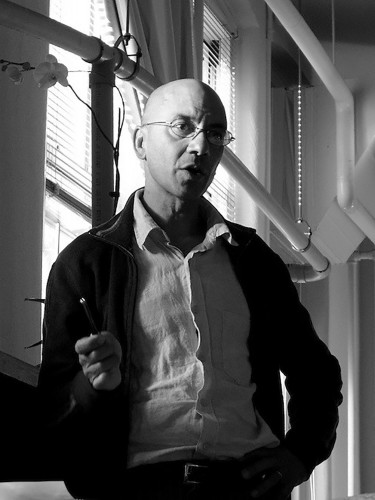
Pradip Malde teaches classes in photography, documentary photography, and electronic media. Since graduating from the Glasgow School of Art in 1980, he has lived and worked as a photographic artist and teacher in Scotland and Tennessee. Malde has exhibited in Europe and the United States, and has works in numerous collections around the world. He is currently working with students and alumni on ways of using photography for community development in Haiti, Honduras, Jamaica, and Grundy County, Tennessee.
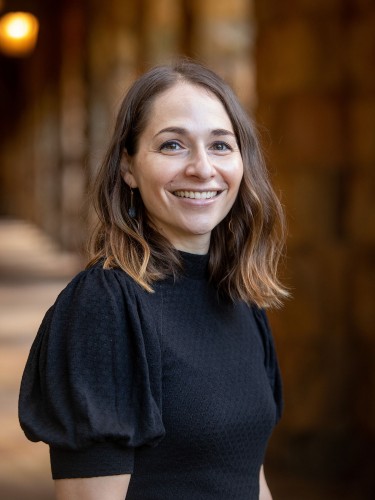
Jessica Wohl is an associate professor of art, teaching drawing, painting, and seminar courses. She received a B.F.A. from the Kansas City Art Institute, and an M.F.A. from the University of Georgia. Her work has been exhibited around the world and is collected by the Nerman Museum of Contemporary Art, the Sprint-Nextel Corporation, H&R Block World Headquarters, and by numerous private collectors.
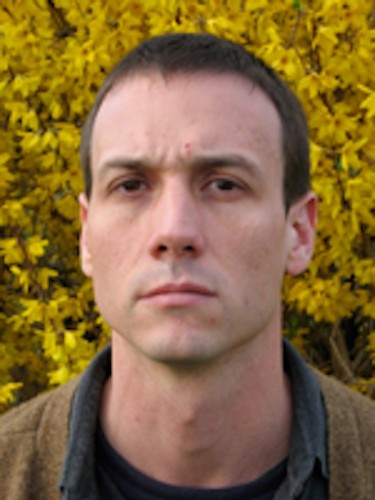
Greg Pond teaches upper division courses in sculpture, intermedia, and film production. He is an artist, teacher, and researcher working at the intersection of art and digital technologies to make sculpture, video, images, sound, and software. Pond has screened, presented, and exhibited his work at venues in Nashville, Memphis, New York, Los Angeles, Chicago, Portland, Austin, Cairo, Basel, Kingston, and Galway.
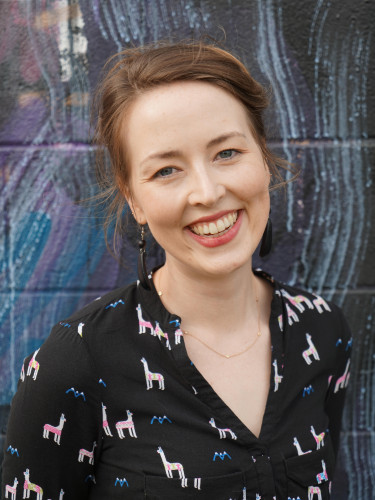
Leslie E. Todd received her PhD in Art History from the University of Florida. She works on early modern art history with a specialization in art of colonial Latin America. She investigates how early modern visual practice enacted and upheld the dynamic relationship between metropole and colony that defined Spanish colonialism in the Americas.
jewohl@sewanee.edu
Studio Art Building 109, Ext. 1256
Professor Pradip Malde's new book From Where Loss Comes explores the practice and customs of female genital mutilation in Tanzania.
Sewanee Class of 2004 Alumnus and Art Major Mary Stuart Hall recently debuted her year long installation at the Atlanta, Georgia International Airport. City as Site is an exhibition of six exhibiting artists at concourse E in the Hartsfield-Jackson International Atlanta Airport. Hall's installation, near gate E15, is called As the Crow Flies.
The Peter V. Guarico Merit Scholarship in Art provides support to senior Art majors for a year of tuition and summer research and internship travel. Candidates are eligible to apply for the scholarship during their junior year with the announcement of the scholarship recipient made at the end of March.
The University Art Gallery and the Department of Art, Art History and Visual Studies of the University of the South are pleased to Present online exhibitions by the graduating Art majors of 2020.
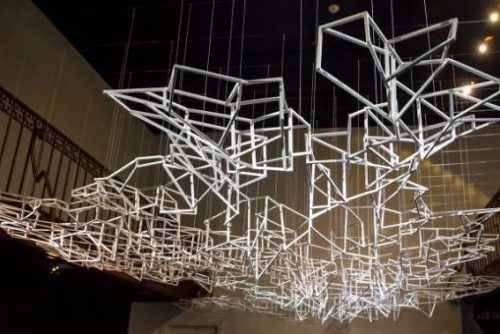
Along with performance venues, Sewanee also has several art and exhibition galleries on campus. The University Art Gallery, the Museum Gallery of Archives, and the Carlos Gallery house everything from contemporary art shows to archived work, featuring current students, accomplished alumni, and internationally acclaimed artists.
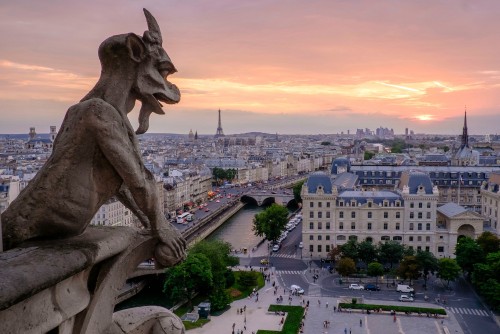
European Studies is a full semester of study abroad and offers the unique experience of studying in a variety of locations in Europe. Students choose between three academic options: ancient Greece & Rome, Western Europe in the Middle Ages and the Renaissance, or Contemporary Europe.

The Tennessee Williams Center provides unique, state-of-the-art facilities for the students and faculty. Created with funds from the estate of Tennessee Williams himself, the center houses a fully equipped 175-seat theatre, a 60-seat studio theatre, a drafting and design studio, a dance studio, costume and scenery studios, and dressing rooms.